Inside
What to notice before you leave the museum route
Do not treat this as one statue and a quick photo. The visit works best as a route toward David, with unfinished sculpture, paintings, and instruments building the story around him.
01
Must see
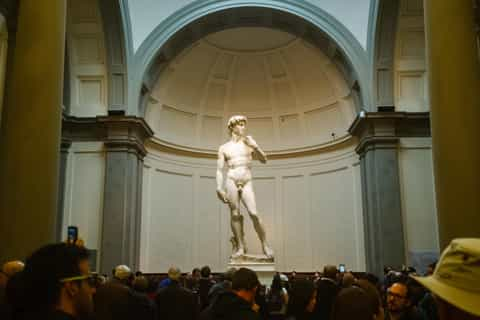
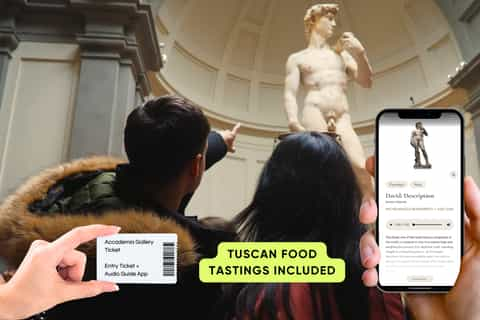
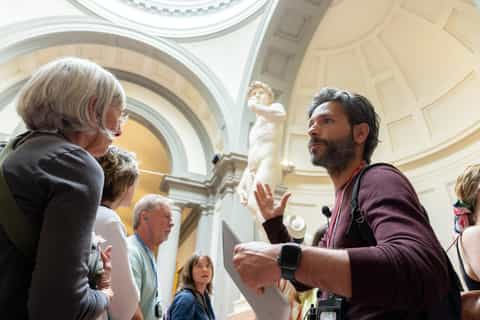
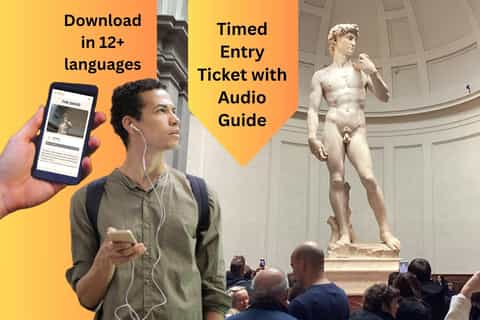
Find David in the Tribuna
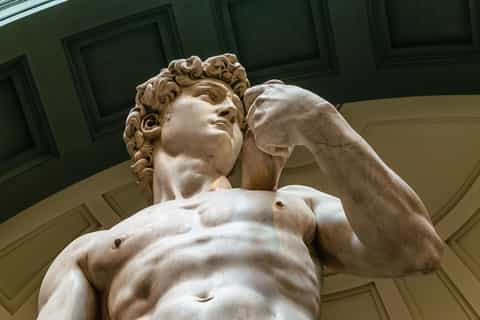
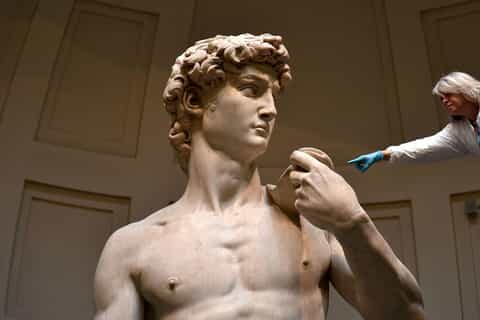
David stands centrally in the purpose-built Tribuna. Walk the long gallery first, then stop at the room’s centre. Most visitors look straight at the front and leave too fast. The side views show the body’s turn and the carved base better.
Try this
Start from the end of the Prisoners corridor, then circle the statue once before you leave.
02
Large figures
Read the Prisoners along the approach
The four Prisoners line the gallery before David. Their unfinished marble shows chisel marks, rough blocks, and figures still trying to emerge. They explain Michelangelo’s process better than a label does. The rough stone makes David feel more finished and more deliberate.
Detail to find
Look for the parts that still look trapped inside the stone.
03
Earlier layer
Look for the gold-ground paintings
The museum is not only about Michelangelo. Its medieval and early Renaissance rooms include gold-ground panels and major Florentine paintings. They give the visit a slower rhythm after the sculpture rooms and help you see how the collection reaches beyond one masterpiece.
Why it matters
This is the best place to pause before you decide whether to stay for more rooms.
04
Large figures
Give time to the Giambologna model
The Hall of the Colossus holds a huge clay model linked to the Rape of the Sabine Women. It is a strong change of pace after Michelangelo. The scale matters here: the room shows how a preparatory work can feel complete in its own right.
Look beyond the model
Step back far enough to read the full spiral of bodies in one view.
05
Look lower
Notice how the Prisoners guide your eyes
The long gallery is not filler. It pulls you toward David and makes the final room feel earned. That route matters more than people expect. Once you slow down, the sequence reads like a staging device, not just a corridor between rooms.
Better viewing rhythm
Move from rough stone to finished marble instead of racing straight to the statue.
06
Free to see
Study the Musical Instruments rooms
The instrument rooms add a different kind of detail. They show court culture, craft, and sound after the sculpture halls. If you like objects that reward close looking, this section gives the visit another layer without changing the museum or adding a second ticket.
Simple approach
Use this as your last indoor stop if you still have energy after David.
07
Free to see
Watch the room, not only the statue
The Tribuna frames David on purpose. It is worth stepping back to see how the room controls the view and makes the sculpture feel central. That design is part of the experience, so spend a minute with the space itself before you move on.
Why it matters
The room helps explain why the statue feels so different from outdoor copies.